Friday, January 1, 2016

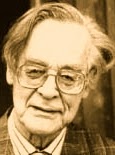
Phyllis Cole-Dai:
"On How to Pick and Eat Poems"


Friends,

I'm not a poet. But for today, as we mark the end of A Year of Being Here (and the start of 2016), I've written you a poem. It was the best gesture of gratitude I could think to offer you.

Before presenting the poem, let me thank you one last time, in every language of the world, for the gift of the past three years. You readers are out there by the thousands, in at least 50 countries. What has united you in this reading community has been your love of poetry—and not just any poetry, but poetry that speaks straight, and beautifully, about life in the present moment; poetry that teaches or reminds us, or even exemplifies for us, how to greet life openly, compassionately, without judgment. Mindfulness poetry, in other words.

It has been my pleasure and my privilege to share with you mindfulness poems that I've collected over the years. I haven't exhausted my supply, by any means, but it's time for me to move along. I bow to all the incredible poets, photographers and artists who have made A Year of Being Here possible. I bow to all of you readers, who have been so generous with your donations, your gifts, your feedback and good wishes, and most of all with your sharing of poems with friends, relatives, colleagues, support groups, communities of faith, patients, students.... I've been amazed by the many stories you've told me about how the poems have rippled out to touch someone at just the right moment. You yourselves have made that happen, and the world is better for it.

A special word of thanks to all of you who took time to complete my end-of-project survey regarding a possible anthology of mindfulness poetry. (If you haven't yet done so, you can still submit yours today by clicking here.) I'll be sure to inform you if such a book develops.

I encourage all of you to keep searching out and sharing poems (and other forms of creative expression) that nurture, inspire, comfort and empower. Remember that the project website and social media accounts will remain up for you to use. But don't stop there. Go looking. The year is new. Let it take you somewhere you've never been.

Now I bow to you, with a full heart, where our humanity meets. I've given you all I can, and you've given me more than you'll ever know. Thank you forever.

Deep peace,
Phyllis

http://www.phylliscoledai.com
https://www.facebook.com/pcoledai/
@phylliscoledai


ON HOW TO PICK AND EAT POEMS


Stop whatever it is you’re doing.
Come down from the attic.
Grab a bucket or a basket and head for light.
That’s where the best poems grow, and in the dappled dark.

Go slow. Watch out for thorns and bears.
When you find a good bush, bow to it, or take off your shoes.
Then pluck. This poem. That poem. Any poem.
It should come off the stem easy, just a little tickle.
No need to sniff first, judge the color, test the firmness.
You’ll only know it’s ripe if you taste.

So put a poem upon your lips. Chew its pulp.
Let its juice spill over your tongue.
Let your reading of it teach you
what sort of creature you are
and the nature of the ground you walk upon.
Bring your whole life out loud to this one poem.
Eating one poem can save you, if you’re hungry enough.

When birds and deer beat you to your favorite patch,
smile at their familiar appetite, and ramble on.
Somewhere another crop waits for harvest.
And if your eye should ever light upon a cluster of poems
hanging on a single stem, cup your hand around them
and pull, without greed or clinging.
Some will slip off in your palm.
None will go to waste.

Take those you adore poem-picking when you can,
even to the wild and hidden places.
Reach into brambles for their sake,
stain your skin some shade of red or blue,
mash words against your teeth, for love.
And always leave some poems within easy reach
for the next picker, in kinship with the unknown.

If you ever carry away more than you need,
go on home to your kitchen, and make good jam.
No need to rush, the poems will keep.
Some will even taste better with age,
a rich batch of preserves.

Store up jars and jars of jam. Plenty for friends.
Plenty for the long, howling winter. Plenty for strangers.
Plenty for all the bread in this broken world.


"On How to Pick and Eat Poems" by Phyllis Cole-Dai. © Phyllis Cole-Dai. Offered in profound gratitude to the community of A Year of Being Here. Listen to Phyllis read the poem here.

Art credit: "Berry Red Vintage Berry Bucket," photograph by


Thursday, December 31, 2015

Naomi Shihab Nye: "Adios"


It is a good word, rolling off the tongue;
no matter what language you were born with
use it. Learn where it begins,
the small alphabet of departure,
how long it takes to think of it,
then say it, then be heard.

Marry it. More than any golden ring,
it shines, it shines.
Wear it on every finger
till your hands dance,
touching everything easily,
letting everything, easily, go.

Strap it to your back like wings.
Or a kite-tail. The stream of air behind a jet.
If you are known for anything,
let it be the way you rise out of sight
when your work is finished.

Think of things that linger: leaves,
cartons and napkins, the damp smell of mold.

Think of things that disappear.

Think of what you love best,
what brings tears into your eyes.

Something that said adios to you
before you knew what it meant
or how long it was for.

Explain little, the word explains itself.
Later perhaps. Lessons following lessons,
like silence following sound.


"Trying to Name What Doesn't Change" by Naomi Shihab Nye. Text as published in Words Under the Words: Selected Poems (Far Corner Books, 1995).  

Art credit: "Sir bird flies into the sunset" in Darwin, Australia, photograph by kevin kelly. 

Curator's note: After a three-year run, this project will conclude tomorrow with a special post. If you haven't already, I'd really appreciate your taking my brief survey regarding a possible anthology of mindfulness poetry.


Wednesday, December 30, 2015

Curator's Note: Giveaway Winner #10


Happy news for Beth Markow of Brunswick, Maine (USA). She has been randomly selected as the final recipient in our End-of-Project Giveaway. Her gift will be The Selected Poems of Wendell Berry. She says she "loves Wendell Berry's work!", so it's another happy match!

"For the last eighteen years," Beth writes, "I have had the privilege of working for one of our community hospitals, taking care of my neighbors and their families. I have held newborns through the night while their moms rested and held the hands of remarkable men and women, honored to be present as they and their families said goodbye for now."

Beth goes on to say, "When I'm open I see poetry all around me, from an ant climbing a single blade of grass to the way the early morning sun shines though the dew on the trees. Poetry grounds me. Poetry captures life and everything about life and in so few words! I know some of this may sound a little corny but this is who I am at my best."

Not corny at all, Beth. Heartfelt! Enjoy your reading of Berry's poetry!

Deep peace,
Phyllis


Kjell Walfridsson: "Restricted Living"


I have lived restricted
for so many years
the days they vanish
the years disappear
One day I feel
from the ocean a breeze
It warms my inside
and melts my ice
There are doors forgotten
that lead somewhere
though I never dared
believe they existed


Jag har varit trångbodd
i så många år
dagar försvinner
åren de går
En dag jag känner
från havet en bris
Den värmer mitt inre
och smälter min is
Det finns glömda dörrar
som leder någonstans
fast jag aldrig vågat
tro att de fanns


"Restricted Living" by Kjell Walfridsson. Text as published by Pietisten: A Herald of Awakening and Spiritual Edification (Winter 1999). Translated from the original Swedish by Tommy Carlson.

Art credit: "Dancing in the ocean breeze," photograph by Heather Piazza (digitally altered by curator).

Curator's note: This project will conclude with a special post on January 1. If you haven't already, please take my brief survey before then regarding a possible anthology of mindfulness poetry.

Tuesday, December 29, 2015

John O'Donohue: "For Grief"


When you lose someone you love,
Your life becomes strange,
The ground beneath you gets fragile,
Your thoughts make your eyes unsure;
And some dead echo drags your voice down
Where words have no confidence.

Your heart has grown heavy with loss;
And though this loss has wounded others too,
No one knows what has been taken from you
When the silence of absence deepens.

Flickers of guilt kindle regret
For all that was left unsaid or undone.

There are days when you wake up happy;
Again inside the fullness of life,
Until the moment breaks
And you are thrown back
Onto the black tide of loss.

Days when you have your heart back,
You are able to function well
Until in the middle of work or encounter,
Suddenly with no warning,
You are ambushed by grief.

It becomes hard to trust yourself.
All you can depend on now is that
Sorrow will remain faithful to itself.
More than you, it knows its way
And will find the right time
To pull and pull the rope of grief
Until that coiled hill of tears
Has reduced to its last drop.

Gradually, you will learn acquaintance
With the invisible form of your departed;
And, when the work of grief is done,
The wound of loss will heal
And you will have learned
To wean your eyes
From that gap in the air
And be able to enter the hearth
In your soul where your loved one
Has awaited your return
All the time.


"For Grief" by John O'Donohue. Text as published in To Bless the Space Between Us: A Book of Blessings (Doubleday, 2008).

Art credit: Untitled image by unknown photographer whose name in the lower-left corner is too small to decipher.

Curator's note: A few days left to gift me with your feedback! Please take this brief survey regarding a possible anthology of mindfulness poetry.


Monday, December 28, 2015

Curator's Note: Giveaway Winner #9


Happy news for Lauri Warren of Chapel Hill, North Carolina (USA). She has been randomly selected as a recipient in our End-of-Project Giveaway. Her gift will be A Thousand Mornings by Mary Oliver, whom, it turns out, she "adores."

Enjoy your reading of Oliver's poetry, Lauri!

Deep peace,
Phyllis


David Wagoner: "The Lessons of Water"


The best way to conduct oneself may be observed in the behavior of water. —Tao te ching

When given a place to wait, it fills that place
By taking the shape of what contains it,
Its upper surface poised and level,
Absorbing, accepting what it can as lightly
Or heavily as it does itself. If pressed
Down, it will offer back in all directions
Everything it was given. If chilled, it will shatter
Daylight and whiten to stars, will harden and sharpen
And turn unforseeably dazzling. Neglected,
It will disappear, being transformed and lifted
Into thin air. Or thrown away, it will gather
With other water, which is all one water,
And rise and fall, regather and go on rising
And falling the more quickly its path descends
And the more slowly as it wears that path away,
To be left awhile, to stir for the moon, to wait
For the wind to begin again.


"The Lessons of Water" by David Wagoner. Text as posted on The Paris Review (12/31/2013). 

Art credit: Untitled image of penguins on an Antarctic iceberg, taken by unknown photographer.

Curator's note: I'm so grateful to all of you who have taken my survey. Everybody's feedback matters. Please provide yours before the project ends on January 1.


Sunday, December 27, 2015

Teddy Macker: "A Poem for My Daughter"


It seems we have made pain
some kind of mistake,
like having it
is somehow wrong.

Don’t let them fool you—
pain is a part of things.

But remember, dear Ellie,
the compost down in the field:
if the rank and dank and dark
are handled well, not merely discarded,
but turned and known and honored,
they one day come to beds of rich earth
home even to the most delicate rose.


God comes to you disguised as your life.
Blessings often arrive as trouble.

In French, the word blesser means to wound
and relates to the Old English bletsian

to sprinkle with blood.

And in Sanskrit there is a phrase,
a phrase to carry with you
wherever you go:

sarvam annam:

everything is food.

Every last thing.


The Navajo people,
it is said,
intentionally wove
(intentionally!)

obvious flaws into their sacred quilts …

Why?

It is there, they say,
in the “mistake,”
in the imperfection,

through which the Great Spirit moves.


Life is easy, yes.
And life is hard.
Life is simple, yes.
And life is complex.
We are tough, yes. But we are also fragile.
Everything’s eternally perfect
but help out if you can.


Work on becoming a native of mind, a native of heart.
No thought, no feeling, could ever be “bad.”

It’s just another creature
in the bestiary of Buddha,
the bestiary of Christ.

Knowing this,
knowing this down to the marrow,
could save you, dear one,
much needless strife.

Remember that wild and strange animals
paused to drink at the pond
of the Buddha’s mind
even after he saw
the morning star.


No matter what you do, no matter what happens,
it is impossible to leave the path.

Let me say that one more time:
No matter what you do, no matter what happens,
it is impossible to leave the path.


Believe it or not, dear Ellie,
some folks carefully imagine
hideous gods tearing at flesh,
clawing at faces,
eating human hearts,
and drinking cups of blood …

Why?

To shake hands with the Whole Catastrophe,
to cultivate the Noble Idiot Yes.

According to their tradition,
there are 84,000 “skillful means,"
84,000 tactics of wakefulness,
84,000 ways to become spaciously alive,
84,000 ways to be at home in your life and in this world.

And many of those skillful means are like this one:

enlightenment through endarkment.


Life appears to be fundamentally ambiguous.

Wily, everycolored, unpindownable.

For evidence of this, spend time with trees.

Over and over they say,

There is no final word.

And big decisions—
decisions concerning
relationships, concerning children,
concerning death—
are rarely made cleanly.

In general, be wary—
even if just a little—
of talk of purity,
of goodness,
of light.


To love everything, not just parts …
To love all of yourself, not just certain traits …
To rest in not knowing …

To carry the cross
and to lay your burden down …

To savor the medicine blue of moon,
the fierce sugar of tangerine …

To be a Christ unto others,
a Christ unto one’s self …

To laugh …

To be shameless, wild, and silly …

To know—fully, headlong,
without compunction—the ordinary magic
of our beautiful human bodies …


these seem worthwhile pursuits, life-long tasks.


By way of valediction, dear Ellie,
I pass along some words
from our many gracious teachers:

Eden is.

The imperfect is our paradise.

All is grace.


"A Poem for My Daughter" by Teddy Macker. Text as published in This World (White Cloud Press, 2015). © Teddy Macker. Reprinted by permission of the poet.

Art credit: Untitled image by unknown photographer.

Curator's note: Another long poem for you to savor into the new year and beyond. Only six days left until the conclusion of A Year of Being Here. Please be sure to complete my survey regarding a possible anthology of mindfulness poetry.


Saturday, December 26, 2015

Jalal ad-Din Muhammad Rumi: Untitled
["The clear bead at the center changes everything"]


The clear bead at the center changes everything.
There are no edges to my loving now.

You've heard it said there's a window
that opens from one mind to another,

but if there's no wall, there's no need
for fitting the window, or the latch.


Untitled ["The clear bead at the center changes everything"] by Jalal ad-Din Muhammad Rumi. Text as published in Rumi: The Book of Love (HarperCollins, 2003), translated from the original Persian by Coleman Barks.

Art credit: "The marble door that leads to nowhere," photograph taken in Naxos, Greece, by the unnamed blogger at legless birds. 

Curator's note: Only seven days left until the New Year and the conclusion of A Year of Being Here. Please be sure to complete my survey regarding a possible anthology of mindfulness poetry.


Curator's Note: Giveaway Winner #8


Happy news for T.L. of Minnesota (USA), who says he doesn't think he has ever won anything until now! He has been randomly selected as a recipient in our End-of-Project Giveaway. His gift will be A Year with Rilke: Daily Readings (Anita Barrows, editor).

T.L. says, "I love to read the wisdom found in mindfulness poetry as my life's journey begins to head toward the far edge of middle age....."

Enjoy your reading of Rilke, T.L.!

Deep peace,
Phyllis


Friday, December 25, 2015

Rolf Jacobsen: "Just Delicate Needles—"


It's so delicate, the light.
And there's so little of it. The dark
is huge.
Just delicate needles, the light,
in an endless night.
And it has such a long way to go
through such desolate space.

So let's be gentle with it.
Cherish it.
So it will come again in the morning.
We hope.


"Just Delicate Needles—" by Rolf Jacobsen. Text as published in The Roads Have Come to an End Now: Selected and Last Poems of Rolf Jacobsen, translated by Robert Bly, Roger Greenwald and Robert Hedin (Copper Canyon Press, 2001). This poem translated from the original Norwegian (found on page 138 of this online source) by Robert Hedin.

Art credit: Untitled image by unknown photographer.


Thursday, December 24, 2015

Curator's Note: Giveaway Winner #7


Happy news for Kay Aitch of Sebastopol, California (USA)! She has been randomly selected as a recipient in our End-of-Project Giveaway. Her gift will be Selected Poems (Barbara Crooker).

Kay describes herself as "a voracious reader and scrabble player, sometime poet and baker." She says that the mindfulness poetry presented by A Year of Being Here has often provided "beauty, strength and solace."

Enjoy your reading of Crooker's poetry, Kay!

Deep peace,
Phyllis


Tom Hennen: "Looking for the Differences"


I am struck by the otherness of things rather than their sameness.
The way a tiny pile of snow perches in the crook of a branch in the
tall pine, away by itself, high enough not to be noticed by people, 
out of reach of stray dogs. It leans against the scaly pine bark, busy
at some existence that does not need me.

It is the differences of objects that I love, that lift me toward the rest
of the universe, that amaze me. That each thing on earth has its own
soul, its own life, that each tree, each clod is filled with the mud of
its own star. I watch where I step and see that the fallen leaf, old
broken grass, an icy stone are placed in exactly the right spot on the
earth, carefully, royalty in their own country.


"Looking for the Differences" by Tom Hennen from Darkness Sticks to Everything: Collected and New Poems (Copper Canyon Press, 2013).

Art credit: "Icy stone," photograph by Gungyoel.

Curator's note: Take a breather from holiday bustle. Read a poem you love. Then take my two-minute survey to will help me (and any potential publishers) decide upon an anthology of mindfulness poetry. A Year of Being Here concludes on January 1.


Wednesday, December 23, 2015

Esther Cohen: "Can I Call You Back?"


Last night as always
I called Bruce
although
he is the best telephone
person I know
he nearly
always says
Can I Call You Back
because he is Doing Something.
Last night he was
cutting up zucchini
and I asked him,
I always ask him
why he can’t talk to me
at the same time as he
cuts up his zucchini but
he can’t. He just can’t.
Later, he calls
back to explain What Happened
the Last Few Days
(nothing and everything)
Mike the painter
has landlord problems
red flying squirrel
still eating Bruce’s grapes
and I listen, thinking
how words
are the musical
notes I love.


"Can I Call You Back?" by Esther Cohen. Reblogged from On Being (12/09/2015), where it was posted as part of Postcards for Hanukkah, a sequence of eight photo-poems by Cohen and photographer Matthew Septimus.

Art credit: Untitled image by unknown photographer.

Curator's note: I know you're busy, but I'd be grateful if you took my two-minute survey before A Year of Being Here concludes on January 1. It will help me (and any potential publishers) decide upon an anthology of mindfulness poetry.


Tuesday, December 22, 2015

Curator's Note: Giveaway Winner #6


Happy news for Jane Spickett of Arlington, Massachusetts (USA)! She has been randomly selected as a recipient in our End-of-Project Giveaway. Her gift will be Red Suitcase (Naomi Shihab Nye).

Jane is a certified spiritual director, artist, organizer, and photographer. "All of these are ways I share that the sacred is immanent in ourselves and our lives," she says. "I read (and write poetry) because it restores me and is yet another reminder  that I am part of something so much bigger than myself."

Enjoy your reading of Nye's poetry, Jane!

Deep peace,
Phyllis


Barbara Crooker: "Solstice"


These are dark times. Rumors of war
rise like smoke in the east. Drought
widens its misery. In the west, glittering towers
collapse in a pillar of ash and dust. Peace,
a small white bird, flies off in the clouds.

And this is the shortest day of the year.
Still, in almost every window,
a single candle burns,
there are tiny white lights
on evergreens and pines,
and the darkness is not complete.


"Solstice" by  Barbara Crooker. Text as posted on Kingdom Poets (12/15/2014). © Barbara Crooker. Reprinted by permission of the poet. 

Art credit: "Christmas," photograph by soulkissfaerie.

Curator's note: Please take my two-minute survey before A Year of Being Here concludes on January 1. It will help me (and any potential publishers) decide upon an anthology of mindfulness poetry.


Monday, December 21, 2015

Wendell Berry: "2007, VI"
["It is hard to have hope"]


It is hard to have hope. It is harder as you grow old,
for hope must not depend on feeling good
and there is the dream of loneliness at absolute midnight.
You also have withdrawn belief in the present reality
of the future, which surely will surprise us,
and hope is harder when it cannot come by prediction
any more than by wishing. But stop dithering.
The young ask the old to hope. What will you tell them?
Tell them at least what you say to yourself.

Because we have not made our lives to fit
our places, the forests are ruined, the fields eroded,
the streams polluted, the mountains overturned. Hope
then to belong to your place by your own knowledge
of what it is that no other place is, and by
your caring for it as you care for no other place, this
place that you belong to though it is not yours,
for it was from the beginning and will be to the end.

Belong to your place by knowledge of the others who are
your neighbors in it: the old man, sick and poor,
who comes like a heron to fish in the creek,
and the fish in the creek, and the heron who manlike
fishes for the fish in the creek, and the birds who sing
in the trees in the silence of the fisherman
and the heron, and the trees that keep the land
they stand upon as we too must keep it, or die.

This knowledge cannot be taken from you by power
or by wealth. It will stop your ears to the powerful
when they ask for your faith, and to the wealthy
when they ask for your land and your work.
Answer with knowledge of the others who are here
and how to be here with them. By this knowledge
make the sense you need to make. By it stand
in the dignity of good sense, whatever may follow.

Speak to your fellow humans as your place
has taught you to speak, as it has spoken to you.
Speak its dialect as your old compatriots spoke it
before they had heard a radio. Speak
publicly what cannot be taught or learned in public.

Listen privately, silently to the voices that rise up
from the pages of books and from your own heart.
Be still and listen to the voices that belong
to the streambanks and the trees and the open fields.
There are songs and sayings that belong to this place,
by which it speaks for itself and no other.

Found your hope, then, on the ground under your feet.
Your hope of Heaven, let it rest on the ground
underfoot. Be it lighted by the light that falls
freely upon it after the darkness of the nights
and the darkness of our ignorance and madness.
Let it be lighted also by the light that is within you,
which is the light of imagination. By it you see
the likeness of people in other places to yourself
in your place. It lights invariably the need for care
toward other people, other creatures, in other places
as you would ask them for care toward your place and you.

No place at last is better than the world. The world
is no better than its places. Its places at last
are no better than their people while their people
continue in them. When the people make
dark the light within them, the world darkens.


"2007, VI" ["It is hard to have hope"] by Wendell Berry. Text as published in This Day: New & Collected Sabbath Poems (Counterpoint, 2013). 

Art credit: Untitled image by unknown photographer.

Curator's note: It's a long post, but I couldn't excerpt it. I believe every word.


Sunday, December 20, 2015

Curator's Note: Giveaway Winner #5


Happy news for Christopher Bellonci of Jamaica Plain, Massachusetts (USA)! He has been randomly selected as a recipient in our End-of-Project Giveaway. His gift will be The Book of the World: A Contemporary Scripture (Phyllis Cole-Dai, editor).

Christopher is a child psychiatrist at Tufts Medical Center. He also teaches mindfulness at the Tufts University Medical School as well as in his consultations to public schools in the Boston area. He appreciates being able to incorporate poetry into his own mindfulness journey and into his teaching of mindfulness to others.

He writes, "I read one of the poems [from A Year of Being Here] recently in a consultation that I found had relevance to the youth we were discussing during our meeting. The medical students have also enjoyed the poetry as a path into their mindfulness practices."

Enjoy your reading of The Book of the World, Christopher!

Deep peace,
Phyllis


Marlene Cookshaw: "Over the Shoulder"


Guilt is a bag someone has carried
up the hill from the pub.  A brown bag
the size of a good catch, or
darkish, and bigger than that:
duffel over the shoulder.

Guilt is a pool with ladders
rising in every direction.
We climb and fall back and climb again.
Who can make the connection between
what snaps underfoot and what drenches us?

We are not taught how to do nothing.
We’re dragged from our busy infancy
and distracted for years till our
balloon of competence shreds.
There are secrets you know,

there is what happens when
what you haven’t imagined occurs.
Pain or its absence. Wind
bares the back of a sparrow’s head
underneath its buffer of down.

I believe in birds, the smallness of them,
their potential for flight, the way
they acknowledge this, even so

nodding and feeding in front of us.


"Over the Shoulder" by Marlene Cookshaw. Text as published in Double Somersaults (Brick Books, 1999).

Art credit: "Black-capped chickadees," image by unknown photographer.

Curator's note: Please take my two-minute survey before A Year of Being Here concludes on January 1. It will help me (and any potential publishers) decide upon an anthology of mindfulness poetry.


Saturday, December 19, 2015

Ron C. Moss: Selection of Haiga


Today we have a selection of haiga (illustrated haiku) submitted by Ron C. Moss, an award-winning visual artist and poet from Tasmania, Australia.

Ron has been published in numerous journals and anthologies including Haiku in English: The First Hundred Years (W. W. Norton & Company, 2013) and Where the River Goes: The Nature Tradition in English-Language Haiku (Snapshot Press, 2013). Among his many current activities, he is an Artisan at The Awakened Eye. As A Year of Being Here draws to a close, he suggests that our readers might be interested in following that site. Learn more here.